Cardboards from Beirut dialoging with Morgane Denzler and Till Roeskens
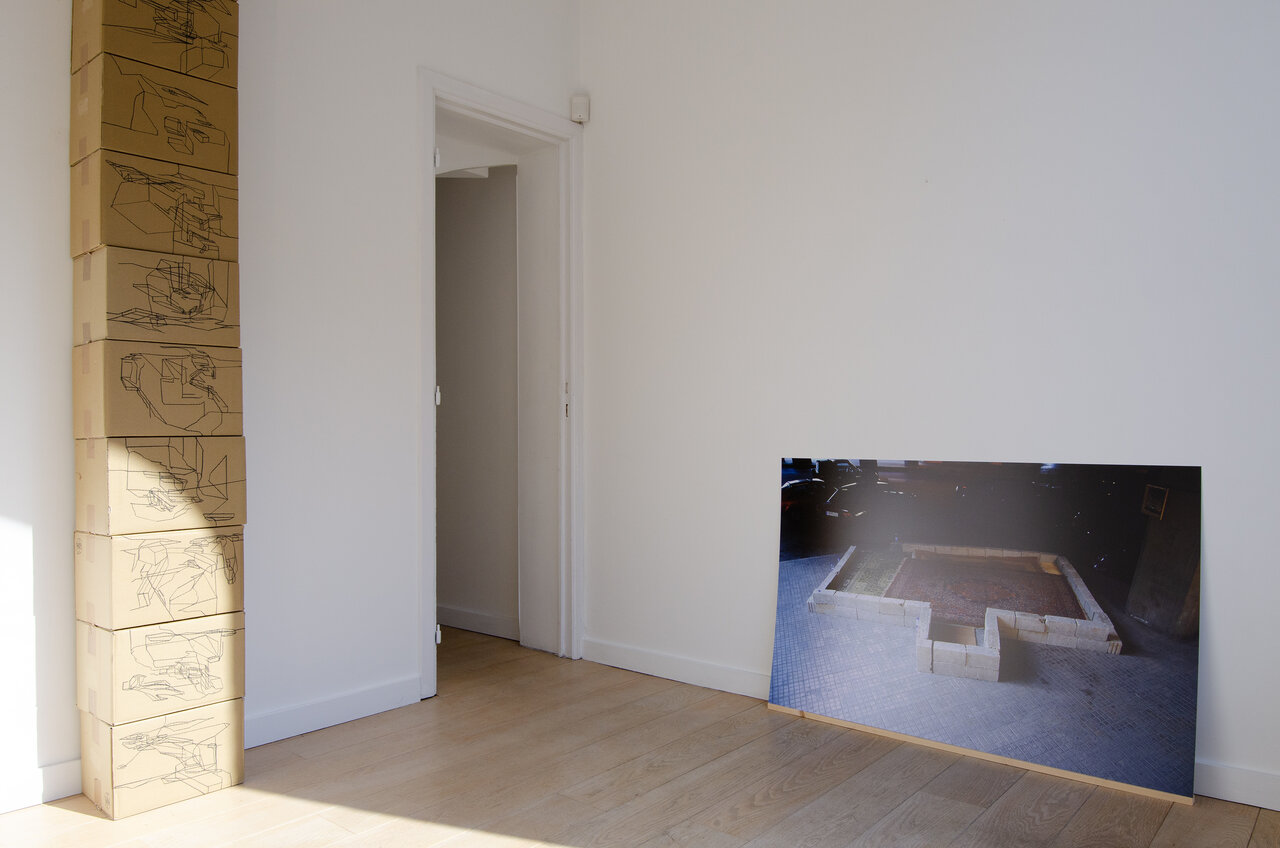
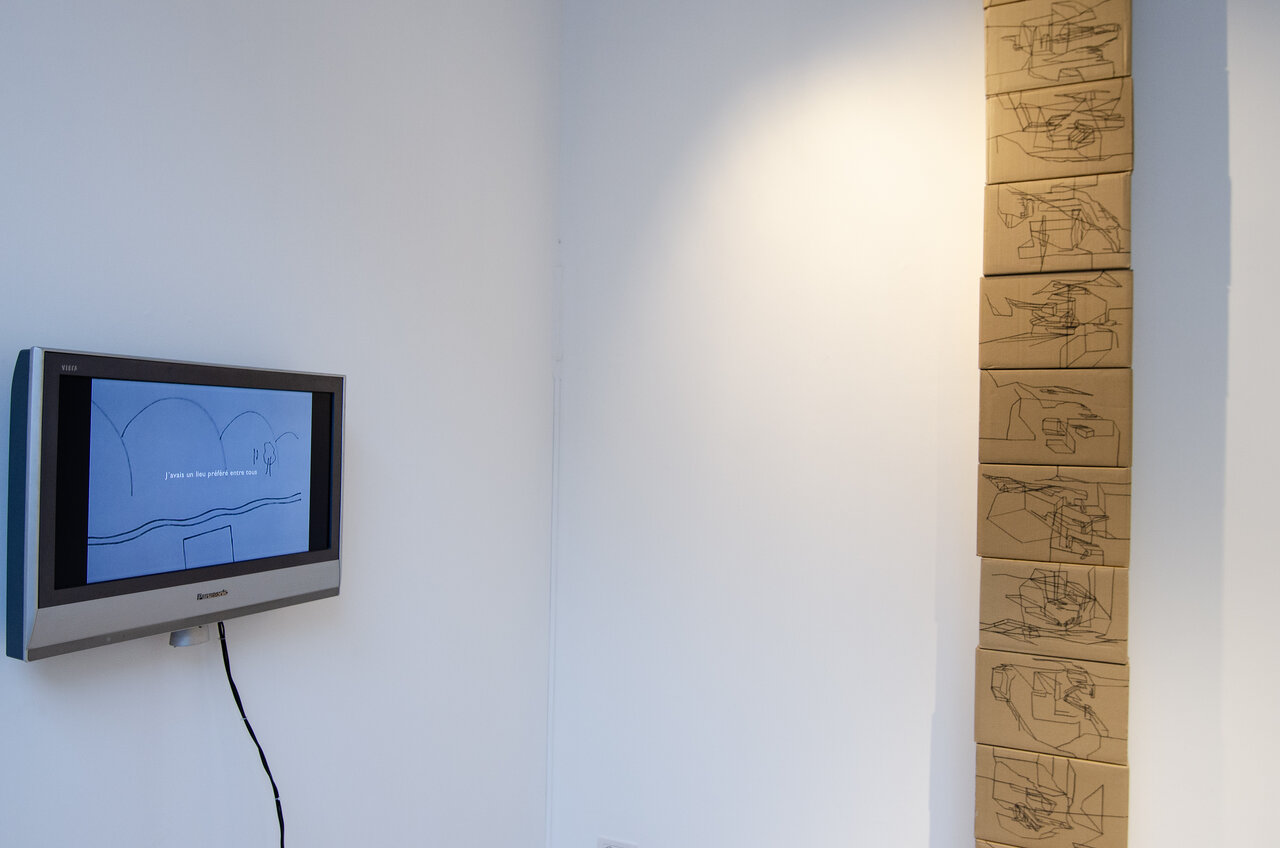
In order to represent space and find our bearings, we mark off zones and create maps. We define territories not only in terms of control and power, but also in terms of history and culture. Laurent Ajina, Morgane Denzler and Till Roeskens extract themselves from standardized notions, relying on memories and powerful experiences to reinvent cartography. Their works are the product of encounters and exchanges. On a wall, on canvas, on paper, or on cardboard, Laurent Ajina draws a line fed by his travels and his own history. He has been specifically exploring his Iraqi roots since 2012 by tracing the outline of his memories. His drawings form networks of lines; silhouettes of architecture and landscapes where words embark and interfere. Fragments of George W. Bush’s speeches mingle with landscapes wounded by a decade of war (Untitled – 2012-2013). Fiction (imagined memories) and reality collide. Landscapes and memories are also articulated in the Morgane Denzler’s works. She photographs mountains highlighting their pictorial quality. The photography is then transformed into a Carte (Map) where the landscape in divided into squares, and folded like a road map, or trail map. Landscapes and topography echo one another. The series Ceux qui restent (Those that remain) brings an alternative dimension to the notion of cartography. In Beirut, Denzler formed a collection of photographs that had been looted from Lebanese families during the war. The artist set out to discover the history of these people that had been forgotten over time. When her search proved unsuccessful, she decided to circumvent “the truth” by speaking to people with Alzheimer’s disease. New truths bloomed and reconstruction took place through their words and images, a rhizomic dynamic that we also find in Till Roeskens’ video work. Roeskens encourages and captures the poetic drawings of daily life and human experience. Videocartographies: Aida, Palestine (Videomappings: Aida, Palestine) brings together the testimonies of the inhabitants of a refugee camp. Bodies, expressions and movements are detained by a blind military strategy, its plans, and its objectives. The artist creates a bond with the people he meets. Their words and drawings are the testimony of an absurd and frustrating daily life. Conversely, Plan de situation (Situation map) translates the free movement of bodies, words, and thoughts. Till Roeskens began a series of films in Marseille that narrate sociology, personal anecdotes, and geographical situations; stories of the past and of modern day are entangled in a live and profoundly humane account. Each having conceived the geography of powerful situations, these three artists invite us to join them on an intellectual journey full of memories and sensations. Their drawings are united in a common desire to search, observe, comment, and pass on stories.
Julie Crenn
Exhibition from September 6 to November 9, 2013.